E-Mail: DBG1@singbonpu.com
Tel: +86-535-6209089
Hey there! As a supplier of Air Cusions Thermoplastic Polyurethane (TPU), I often get asked about the Poisson's ratio of our Air Cusions TPU. So, I thought I'd write this blog to share some insights on this topic.
First off, let's quickly explain what the Poisson's ratio is. In simple terms, it's a measure of how a material behaves when it's stretched or compressed. When you pull on a material, it usually gets longer in the direction you're pulling, but it also gets thinner in the directions perpendicular to the pull. The Poisson's ratio is the ratio of the transverse strain (the change in thickness) to the axial strain (the change in length).
Now, for our Air Cusions TPU. The Poisson's ratio of this material is quite unique and plays a crucial role in its performance. Our Air Cusions TPU is designed to have a specific Poisson's ratio that allows it to absorb shock effectively. When it's compressed, it doesn't just squish down in one direction. Instead, it distributes the force evenly in all directions, thanks to its well - balanced Poisson's ratio.
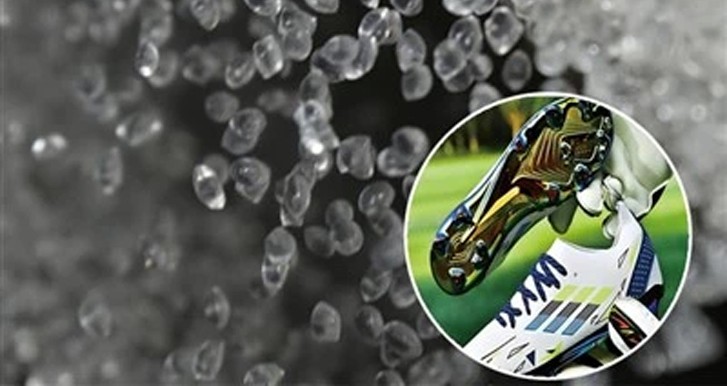
This characteristic is super important for applications where shock absorption is key. For example, in sports equipment like Football Shoe Soles TPU Materials, the right Poisson's ratio ensures that the sole can handle the impact of running, jumping, and sudden stops. When a player's foot hits the ground, the Air Cusions TPU sole compresses, and its Poisson's ratio helps it spread the force across the sole, reducing the stress on the foot and providing better comfort and support.
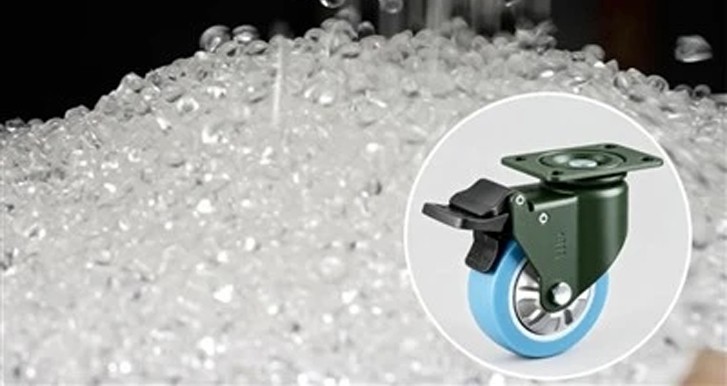
Another application is in wheels. Our 97a TPU for Wheels has a carefully tuned Poisson's ratio. When the wheel rolls over bumps or uneven surfaces, the TPU compresses and expands in a way that maintains stability and smoothness. The Poisson's ratio allows the wheel to adapt to different terrains without losing its shape or functionality.
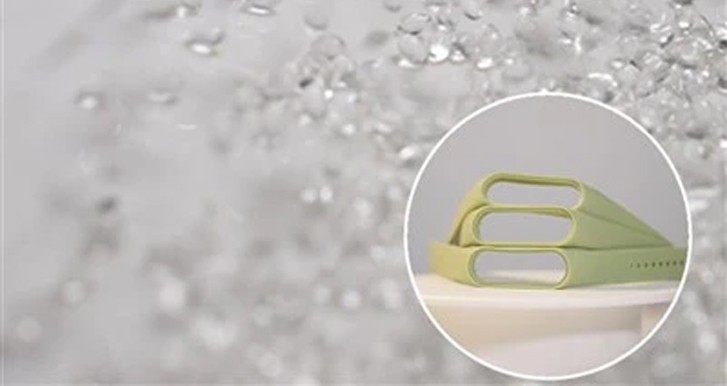
The Poisson's ratio of our Air Cusions TPU also affects its flexibility. A material with a proper Poisson's ratio can bend and flex without cracking or breaking. This is essential for products like Mobilon Tape TPU, which needs to be able to conform to different shapes and surfaces. The tape can be stretched and wrapped around objects, and its Poisson's ratio ensures that it remains intact and functional.
In the electronics industry, High Transparent TPU for Electronics benefits from the right Poisson's ratio as well. Electronic devices often experience vibrations and impacts. The TPU can act as a protective layer, and its Poisson's ratio helps it absorb these shocks, safeguarding the delicate components inside the device.
So, how do we determine the Poisson's ratio of our Air Cusions TPU? We use a combination of advanced testing methods and computer simulations. In the lab, we perform experiments where we stretch and compress samples of the TPU and measure the resulting strains. We also use computer models to predict how the material will behave under different conditions. This way, we can fine - tune the manufacturing process to achieve the desired Poisson's ratio.
One of the great things about our Air Cusions TPU is its consistency. We've developed a manufacturing process that ensures every batch of TPU has a very similar Poisson's ratio. This is important for our customers because they can rely on the performance of our TPU in their products. Whether they're making a small batch of prototypes or a large - scale production run, they know that the TPU will behave the same way every time.

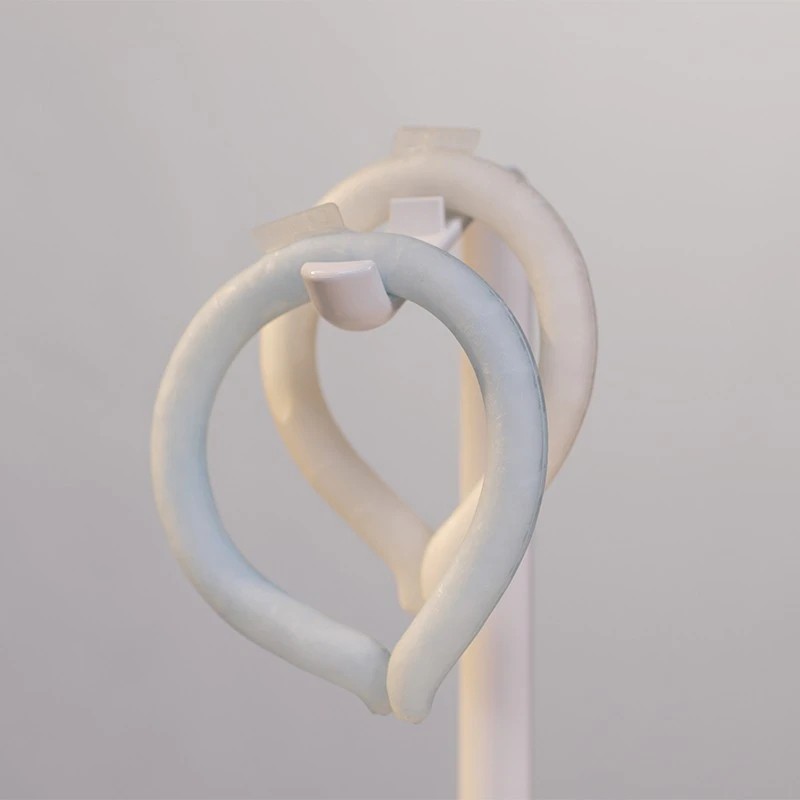
If you're in the market for high - quality TPU with a well - defined Poisson's ratio, you might be interested in our Thermoplastic Polyurethane Resin TPU. It's a versatile material that can be used in a wide range of applications, from automotive parts to consumer goods.
We're always looking for new customers and partners. If you're interested in learning more about our Air Cusions TPU or have any questions about the Poisson's ratio or other properties of our materials, don't hesitate to reach out. We'd love to have a chat with you and see how we can meet your TPU needs. Whether you're a small startup or a large corporation, we're here to provide you with the best TPU solutions.
References
"Materials Science and Engineering: An Introduction" by William D. Callister Jr. and David G. Rethwisch
"Mechanical Behavior of Materials" by Norman E. Dowling